 Report Time: 10:00 a.m., July 13, 2026
Venue: Room A507, School of Mechanical and Electrical Engineering
Organizers:
School of Mechanical and Electrical Engineering
State Key Laboratory of Intelligent Mining Equipment Technology
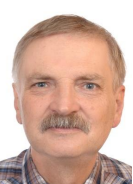
Speaker: Professor Grzegorz Litak
Speaker Introduction:
Dr Grzegorz Litak was born (1963) in Lublin, Poland. He completed his M.Sc. degree in physics at Maria Curie Skłodowska University (UMCS) in Lublin, Poland in 1988. Later, working on the effect of disorder on correlated and exotic superconductors, he received his Ph.D (1994) and D.Sc (2002) degrees from the same University. After defending his Ph.D thesis he moved to Lublin University of Technology where he is presently working as a full professor. From that time, he also started his research on nonlinear dynamics. He focused on bifurcation theory, chaotic dynamics and nonlinear time series analysis. Recently, he was also involved in research on mechanical energy harvesting, focusing on frequency broadband effects. While working at the Lublin University of Technology, in 2014, he received the professor title in the field of technical sciences. In 2016-2018 he was also a professor at the AGH University of Science and Technology. G. Litak is an expert on nonlinear and complex phenomena. G. Litak published over 350 papers including about 320 in international journals. He actively collaborates with many researchers from various countries around the world. Presently, he is a member of the Polish Physical Society, European Physical Society, Polish Society of Theoretical and Applied Mechanics and Euromech. Prof. Litak was an organizer and invited speaker of many international conferences. He promoted 5 doctors in the field of mechanics and machine construction. He was also the contractor and manager of many national and international projects.
Abstract of the Presentation:
The concept of recurrences of conservative systems can be traced back to the discoveries of Henri Poincaré that were presented in 1890, for which he was awarded a prize by King OSCAR II of Sweden and Norway. Despite the great interest of scientists in this topic, the concept of recurrences gained practical importance over 70 years later due to the development of efficient computer systems. In 1987, based on the Poincaré’s achievements, Eckmann, et al. introduced the Recurrence Plot (RP) method. Initially, the method was used for the purposes of visualisation of system trajectories but the following development of the Recurrence Quantification Analysis (RQA) consolidated the method as a tool for nonlinear data analysis. Today the RP method and its quantification (RQA) are used for the purposes of detection of qualitative changes in the dynamic behaviour of mechanical systems, and therefore should be ideally suited to non-linear vibration energy harvesting systems. The method in employed in various fields of science such as, astrophysics, biology, chemistry, geology, cardiology, neuroscience and the economy. In this lecture the RP and RQA methods are used for the purposes of detecting differences in the dynamic responses of the selected nonlinear systems and technological processes.