 Lecture Time: 9:00, April 4, 2026
Lecture Venue: A507, School of Mechanical and Electrical Engineering
Host: School of Mechanical and Electrical Engineering
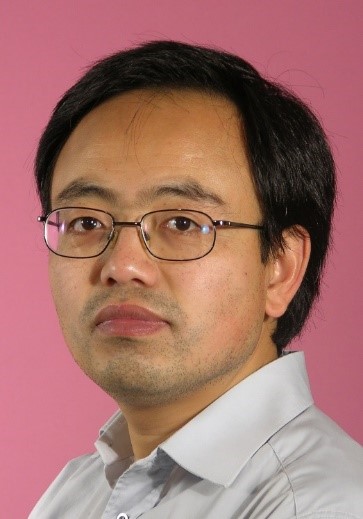
Lecturer: Wuliang Yin
Lecturer's Biography: Professor Wuliang Yin is a doctoral supervisor at the University of Manchester, UK. He is a Senior Member of the IEEE, a member of SAE International, an overseas expert appointed by the Ministry of Education of China, and a reviewer for several international journals. Since 1999, he has conducted research on process tomography and novel electromagnetic measurement methods at the University of Manchester Institute of Science and Technology (UMIST), Lancaster University, and the University of Leeds. He has led or participated as a key researcher in numerous major projects funded by the UK Engineering and Physical Sciences Research Council (EPSRC) and the European Framework Programs. In recent years, he has published over 350 academic papers in leading domestic and international journals and conferences, including more than 200 SCI-indexed papers with over 6,000 total citations. He holds 2 U.S. patents, 1 European patent, 1 Canadian patent, and more than 20 Chinese national invention patents. He has organized multiple IEEE Distinguished Lectures and has been invited to give lectures at the U.S. National Institute of Standards and Technology (NIST) and the U.S. Department of Energy's national laboratories (e.g., Blackhaven).
Lecture Abstract:
This lecture primarily introduces the theoretical methods developed by Professor Wuliang Yin’s team in recent years in the field of electromagnetic nondestructive testing and imaging, along with their practical applications across several key industries. The main contents include: 1) Electromagnetic induction nondestructive testing and imaging technologies; 2) System design for electromagnetic induction nondestructive testing and imaging; 3) Applications in typical nondestructive testing scenarios (including crack identification in aircraft rivet structures using array eddy current testing, thickness measurement and layered reconstruction using pulsed eddy current, welding quality assessment for new energy batteries, non-contact rail flaw detection, burn detection in critical metal components, and automatic tracking measurement using robotic platforms, etc.).